


If you have family in Cuba, you already know that sending money alone often doesn’t solve the problem. Store shelves run empty for weeks at a time, and cash loses value faster than most people can spend it. That’s why so many Cuban families abroad have switched to ordering directly through tiendas online para envios a Cuba, stores that let you buy groceries, appliances, and household basics online and have them delivered straight to a relative’s door on the island.
This guide walks through how these stores actually work, what separates a reliable one from a risky one, and which categories of goods make the most sense to send. It also points to a few specific resources if you’re shipping from Miami or trying to figure out delivery in a particular Cuban city.
What Are Tiendas Online Para Envios a Cuba?
These are e-commerce platforms, usually run by companies based in the US or Europe, that sell physical goods for delivery inside Cuba. You place the order and pay from wherever you are. The store handles the logistics of getting the package into Cuba and out to the recipient’s address, sometimes through their own delivery fleet, sometimes through local partners.
The model exists because Cuba’s own retail supply is unpredictable. A store in Havana might have rice on Monday and nothing but vinegar by Thursday. Buying through an online platform sidesteps that by shipping the product in from outside, so your relative gets what you actually ordered instead of whatever happens to be on the shelf that week.
Why Families Are Choosing This Over Sending Cash
Cash sent to Cuba has to be converted, spent, and often chased down in a market where basic goods are scarce. A relative might receive $100 and still spend three days searching for cooking oil. Ordering through tu envío a Cuba skips that entire process. You choose the product, pay in dollars or euros, and the item shows up at the door.
There’s also a control factor. When you send cash, you’re trusting that it gets spent on what your family actually needs. When you send a specific product, that decision is already made. For families dealing with rationing or shortages of particular items, that certainty matters more than convenience.
What to Look For Before You Order
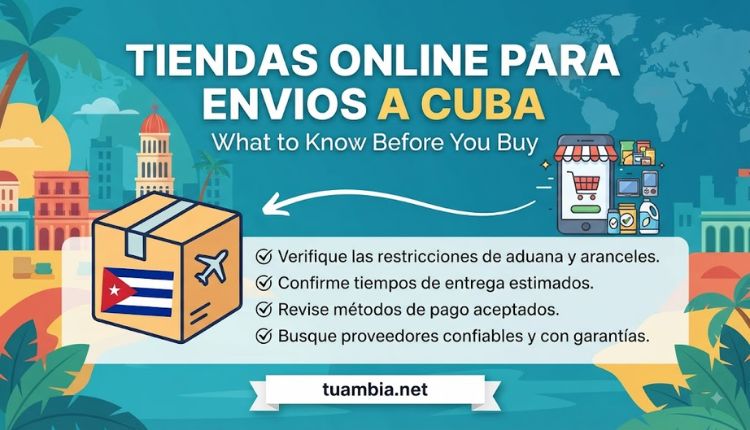
Not every site that promises delivery to Cuba is worth using. A few things separate the platforms that reliably deliver from the ones that leave you emailing customer support for three weeks.
Delivery coverage: Some stores only reach Havana and a handful of provincial capitals. Others cover smaller municipalities. If your family lives outside a major city, confirm coverage before you pay, not after.
Real product photos and current stock: Sites that show generic stock photography or never update out-of-stock items tend to be the ones where orders get substituted without warning.
Clear pricing in your currency: You should know exactly what you’re paying in dollars or euros, including delivery fees, before you check out. Hidden fees added at the last screen are a common complaint in this space.
A working way to reach support: Deliveries to Cuba occasionally get delayed by customs, weather, or address issues. A store with a phone number or WhatsApp line that actually gets answered, like the contact options on Cubamax’s site, makes a real difference when something goes wrong.
Reviews from actual customers, ideally recent ones. A five-year-old testimonial tells you nothing about how the company operates today.
What You Can Actually Send
Food and Groceries
This is the category most people start with, and for good reason. Rice, cooking oil, powdered milk, coffee, and protein are consistently hard to find in Cuban markets. Most platforms sell pre-built combo boxes covering a month of basics, alongside à la carte options if your family needs something specific. For a closer look at what’s typically included and how portions are priced, see this breakdown of alimentos para Cuba.
Appliances and Electrodomésticos
Refrigerators, pressure cookers, induction stoves, and fans are some of the most requested items, partly because Cuba’s aging power grid makes energy-efficient appliances genuinely useful, and partly because replacing a broken fridge locally can take months. If a relative’s refrigerator has finally given out, this guide to ordering a refrigerador para Cuba covers sizing and delivery logistics. For larger appliance purchases generally, it’s worth reading through this guide to choosing electrodomésticos para Cuba before committing to a specific model.
Household and Hygiene Basics
Soap, detergent, diapers, and cleaning supplies round out most orders. These items are lightweight to ship and almost always in demand, which is why they show up in nearly every combo package these stores sell.
Where the Shipments Actually Come From
A lot of these platforms route their inventory through Florida before it ever reaches Cuba, which makes sense given how large the Cuban American community in Miami is. If you’re trying to understand how that pipeline works, from warehouse to island delivery, this piece on envío de comida a Cuba desde Miami lays out the typical route and timing.
Local Pickup Points and City-Specific Delivery
Coverage varies a lot by province, and delivery speed often depends on how close the recipient is to a regional distribution point. A few examples worth knowing if you’re ordering for family outside Havana:
- Guantánamo has its own dedicated storefront through Supermarket 23, which is useful if your relatives live in the eastern part of the island where fewer platforms operate.
- In Havana, Villa Blanca Supermarket and Mercado 23 are two of the more established options, each with slightly different product catalogs worth comparing before you choose.
- Ciego de Ávila and Holguín are covered through Katapulk’s regional pages, including current offers in Ciego de Ávila and deals in Holguín, both of which get updated as promotions change.
Checking whether a store actually services your relative’s specific municipality, rather than just “Cuba” as a blanket claim, will save you from a canceled order later.
Comparing Platforms Before You Commit
With dozens of these sites competing for the same customers, it’s worth comparing more than just price. This roundup of páginas de envíos a Cuba breaks down several platforms side by side, looking at delivery windows, catalog size, and how each one handles problems when a package gets held up.
A good rule of thumb: order something small the first time, like a single grocery combo, before trusting a store with a larger appliance purchase. It’s a cheap way to test how a company handles communication and delivery before you’re a few hundred dollars in.
Staying Connected While You Wait
Coordinating a delivery usually means a few calls back and forth to confirm the address, the recipient’s ID, or a delivery window. If cost is a concern, there are ways to call Cuba for free using WiFi-based apps rather than racking up international minutes, which makes it easier to stay in touch with the delivery driver or your family without worrying about the bill.
Common Questions
How long does delivery actually take?
Most food orders arrive within 3 to 10 business days, depending on the province. Appliances can take longer, sometimes two to three weeks, since they usually ship as a separate freight category.
Can I track my order once it’s placed?
Most established platforms provide some form of order status update, though real-time GPS tracking as you’d see with a US carrier isn’t standard yet. Some rely on delivery confirmation calls or texts to the recipient instead.
What happens if the recipient isn’t home?
Policies differ by store. Some hold the package at a local distribution point for pickup; others attempt redelivery once. It’s worth asking this before you order, particularly for appliances that are harder to reschedule.
Is it cheaper to send cash and let my family buy locally?
Not usually, and it’s less reliable. Between currency conversion losses and product scarcity, cash often buys less than the equivalent spent through a direct delivery order, especially for items like appliances that are hard to find in local stores at any price.
Choosing the Right Store for Your Family
The honest answer is that no single platform is the best fit for everyone. A family in central Havana has options that someone with relatives in a smaller town in Guantánamo province doesn’t.
Start by confirming delivery coverage for the specific address you’re sending to, compare pricing across two or three stores for the same items, and read recent customer feedback before placing a large order. Once you find a platform that delivers consistently, it tends to be worth sticking with, since a reliable delivery history matters more in this market than shaving a few dollars off a single order.
