


If you’ve typed “camaguey cuba fotos” into a search bar, you’re probably chasing one of two things: proof that this labyrinth of a colonial city is as beautiful as everyone says, or a mental packing list before your own trip. Either way, you’re in the right place. Camagüey doesn’t get the tourist crowds that Havana or Trinidad pull in, and that’s exactly why its photos hit differently. Empty cobblestone alleys at 7 a.m., clay jars sitting in doorways like they’ve been there since 1750 (because some of them have), and a UNESCO-listed old town that was literally designed to confuse pirates.
This guide walks through where those photos come from, what makes each spot worth the walk, and a few things nobody tells you until you’re standing there with your camera and no idea which alley leads back to your hotel.
A Quick Bit of Context Before You Start Shooting
Camagüey was founded in 1514 as Santa María del Puerto del Príncipe and moved inland in 1528 after one too many pirate raids. The move wasn’t just relocation. City planners built the new streets as a deliberate maze of dead ends and forked alleys, so that anyone who broke through the defenses would get lost trying to leave. That’s still the layout today, and it’s the reason every photo you take here looks a little different from the last, because the streets never run in a straight line for long.
In 2008, UNESCO named the historic center a World Heritage Site, covering 54 hectares and roughly 83 buildings of real architectural value. The city’s other claim to fame sits in plain sight on almost every street corner: the tinajón, a giant clay jar once used to store rainwater during dry spells. Locals still call Camagüey “la ciudad de los tinajones,” and you’ll understand why within your first ten minutes of walking around.
Where to Get the Best Camagüey Photos
Plaza San Juan de Dios
This is the plaza most people picture when they think of colonial Camagüey. Pastel-colored houses with wooden balconies line one side, and the Cathedral of Our Lady of Candelaria, dating back to 1530, anchors the other. Come in the late afternoon when the light turns the yellow and blue facades almost gold. There’s a small restaurant here, La Campana de Toledo, with an interior courtyard full of tinajones if you want an indoor shot as a backup.
Plaza del Carmen and the Bronze Statues
If you only photograph one plaza, make it this one. Sculptor Martha Jiménez, a Cuban artist and UNESCO award winner, has her studio right on the square, and her life-sized bronze figures are scattered across the plaza itself: women gossiping on doorsteps, a man reading a newspaper, everyday Camagüeyano life frozen mid-gesture. It’s one of the few places in Cuba where the “street photography” basically composes itself.
Iglesia de Nuestra Señora de la Merced
Built in 1748, this church holds one of the most detailed baroque altars in Cuba, carved from silver. The plaza out front, framed by the church’s twin towers, is a solid wide-shot location, especially around sunset when the crowds thin out and the light softens.
Parque Ignacio Agramonte
Named for the local independence hero, this park sits at the heart of the historic center and gives you a classic “town square” shot with the cathedral in the background. It’s also one of the founding spaces of the UNESCO-listed zone, alongside the plazas of San Juan de Dios, El Carmen, and Los Trabajadores, visit more.
The Tinajones Themselves
You don’t need a specific address for this one. Tinajones show up in courtyards, on street corners, and outside restored colonial mansions all over the old town. Some of the best examples sit in the patios of Casa de la Trova and along Calle República. Get close enough to show the texture of the clay, and you’ll have a shot that says “Camagüey” more clearly than any skyline ever could.
Camagüey’s Top Photo Spots at a Glance
| Location | Best For | Ideal Time | Why It Stands Out |
| Plaza San Juan de Dios | Colonial architecture, wide shots | Late afternoon | Best-preserved colonial facades in the city |
| Plaza del Carmen | Street photography, sculpture | Morning, before the heat sets in | Martha Jiménez’s bronze statues make every shot a scene |
| Iglesia de la Merced | Architecture, interiors | Golden hour | Baroque silver altar, rarely crowded |
| Parque Ignacio Agramonte | City life, portraits | Midday to early evening | Central meeting point, good people-watching |
| Calle República / Casa de la Trova | Tinajones, textures, doorways | Anytime, but shade helps | The clearest visual symbol of the city |
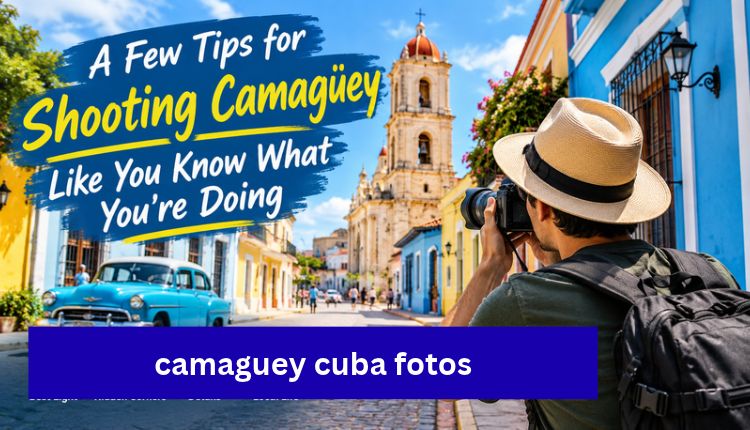
A Few Tips for Shooting Camagüey Like You Know What You’re Doing
Go early or go late. Camagüey sits close to sea level in central Cuba, and the midday sun bleaches out the pastel walls that make the old town worth photographing in the first place. Shoot between 7 and 9 a.m. or after 4 p.m., and the colors do half the work for you.
Get lost on purpose. The confusing street layout that was built to trap pirates is also what makes wandering here so rewarding. Some of the best courtyard and doorway shots aren’t on any map, they’re just down whichever alley looks interesting.
Ask before photographing people up close. Camagüeyanos are generally warm about it, but a nod or a quick “¿puedo?” goes a long way, especially around the plazas where locals actually live and sit outside their homes.
Bring a wide lens for the plazas and something closer to 50mm for the tinajones and architectural details. The narrow streets don’t leave much room to back up for a wide shot, so know your gear’s limits before you’re standing in a dead-end alley trying to fit an entire church into frame.
Beyond the Photos: Staying Connected to Camagüey
For a lot of people searching for camaguey cuba fotos, this isn’t just travel planning. It’s homesickness, or curiosity about a place where family still lives. If that’s you, photos are only part of staying connected. Plenty of Cubans abroad also look for practical ways to support relatives back home, whether that’s sending food to family in Cuba for a birthday or just making sure the pantry is stocked.
If you’re based in the U.S. and want a reliable option nearby, there are trusted shipping agencies in Houston that specialize in getting packages to Camagüey and other provinces without the usual headaches. For everyday essentials like milk and dairy, services such as Villa Leche make it easy to keep a Camagüeyano household stocked from a distance. And if you’d rather browse deals before deciding what to send, Katapulk’s daily offers are worth checking before you place an order.
If you run into any issues along the way, from a delayed delivery to a question about an order, the Tuambia customer support guide walks through exactly how to get a real answer.
FAQs About Camagüey Cuba Photos
What is the best time of year to photograph Camagüey?
Winter and early spring, roughly November through April, bring drier weather and clearer skies. Cuba’s rainy season runs from May to October, and while a fresh rain shower can actually make the cobblestones look great in photos, it also means more overcast days that flatten the light on those colorful facades.
Is Camagüey safe to walk around with a camera?
Yes, generally. Camagüey sees far fewer tourists than Havana, which means less hassle and fewer scams targeting visitors. Normal travel precautions apply: keep gear secured, avoid flashing expensive equipment in quiet areas late at night, and stick to well-lit streets after dark.
Why is Camagüey called the “City of Tinajones”?
The nickname comes from the large clay jars, tinajones, that colonial-era residents used to collect and store rainwater during dry spells. They’re no longer used for that purpose, but they’ve stuck around as the city’s unofficial symbol and show up in nearly every tourist photo taken here.
Do I need a guide to find the best photo spots?
Not really. The historic center is walkable and compact enough to explore on your own in a day or two. A local guide can add context and stories you’d otherwise miss, but for pure photography, wandering the plazas and side streets works just fine.
How does Camagüey compare to Trinidad or Havana for photography?
Havana gives you scale and faded grandeur, and Trinidad gives you a smaller, more polished colonial core. Camagüey sits in between: less restored than Trinidad, less crowded than Havana, with a street layout that’s genuinely unique in Cuba. If you want photos that don’t look like everyone else’s Cuba trip, Camagüey delivers.
Final Thoughts
Camagüey rewards patience more than any checklist. The best camaguey cuba fotos rarely come from the obvious postcard angle, they come from turning down a street you weren’t planning to take and finding a tinajón sitting outside a doorway that’s been painted the same blue for fifty years. Spend a couple of unhurried days in the historic center, shoot during the soft light hours, and let the maze of alleys do what it was built to do: slow you down long enough to actually see the place.
