

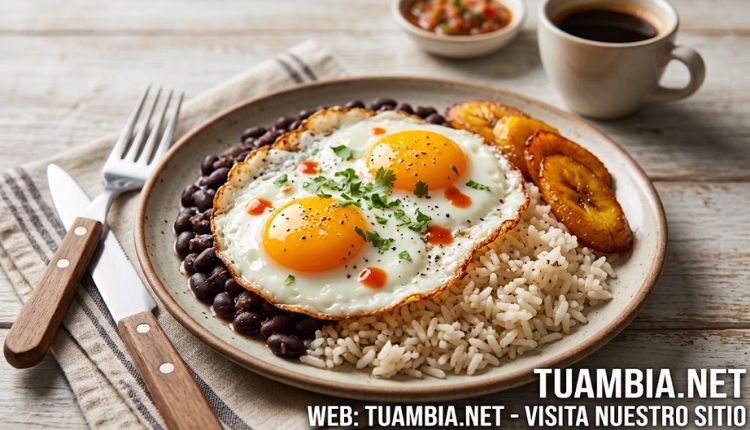
If you’ve ever watched a Cuban grandmother crack an egg into hot oil without measuring a single thing, you already know why huevos cubanos matter more than their humble name suggests. Huevos cubanos are Cuban-style fried eggs, usually served over white rice with black beans and sweet plantains, and they’re one of the most eaten dishes on the island. Cheap, fast, and endlessly comforting, they show up at breakfast, lunch, and sometimes dinner too, because nobody in Cuba ever decided eggs should be limited to mornings.
This guide walks through what huevos cubanos actually are, how they differ from a few dishes that get confused with them, and how to cook a proper plate at home, even if your kitchen is nowhere near Havana.
What Are Huevos Cubanos, Exactly?
At its core, huevos cubanos means fried eggs cooked Cuban style: crispy, lacy edges, a runny yolk, and enough oil in the pan that the egg practically fries itself rather than sitting flat like a diner-style egg. The technique traces back to Spanish colonial cooking, adapted over generations with whatever ingredients were on hand, which is basically the story of most of Cuba’s popular comida.
The dish rarely stands alone on a plate. It’s almost always paired with:
- White rice (arroz blanco)
- Black beans, either whole or as the classic Moros y Cristianos
- Fried sweet plantains (maduros)
- Sometimes a side of avocado when it’s in season
That combination, eggs plus rice plus beans plus plantains, is often just called “huevos a la cubana” on menus outside Cuba, and it’s the version most people picture when they hear the phrase.
Huevos Fritos vs. Huevos a la Cubana: What’s the Difference?
People use these terms almost interchangeably, but there’s a small distinction worth knowing.
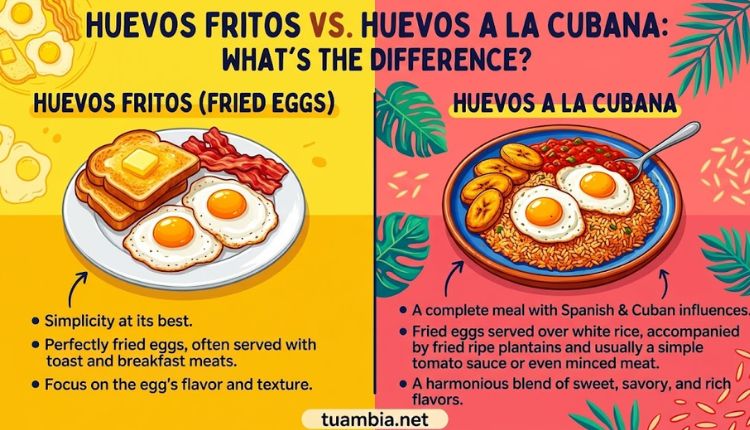
Huevos fritos refers strictly to the eggs themselves: fried in oil, crispy at the edges, yolk left soft. That’s the technique.
Huevos a la cubana refers to the full plate: the fried eggs served on rice with beans, plantains, and sometimes a light tomato sauce spooned over the top. If a menu just says “huevos cubanos,” you’re usually getting the full plate, not just the eggs on their own.
Neither version involves much spice. Cuban cooking leans on garlic, cumin, oregano, and citrus rather than heat, so if you’re expecting a fiery breakfast, adjust your expectations. This is comfort food, not a chili challenge.
Ingredients for a Real Plate of Huevos Cubanos
You don’t need anything exotic here. That’s the whole point of the dish; it was built around what was cheap and available.
For the eggs:
- 2 large eggs per person
- Neutral oil (vegetable, sunflower, or corn oil), enough to coat the bottom of the pan generously
- Salt to taste
For the rice and beans:
- White rice, cooked plain
- Black beans (canned works fine, though dried beans cooked with garlic and onion taste better)
- Garlic, onion, cumin, bay leaf, and a splash of vinegar for the beans
For the plantains:
- Ripe plantains (the skin should be mostly black, not green)
- More of that same neutral oil for frying
That’s it: no specialty spice blends, no hard-to-find cuts of meat. If you’ve got a well-stocked pantry, you’re already halfway there.
How to Make Huevos Cubanos at Home
Step 1: Start the rice and beans first: These take the longest, so get them going before you touch the eggs. If you’re using canned black beans, simmer them with sautéed garlic and onion for about 15 minutes so they actually taste like something. Cook your rice separately, plain and fluffy, Visit more.
Step 2: Fry the plantains: Slice ripe plantains diagonally, about half an inch thick. Fry in oil over medium heat until golden on both sides, roughly two to three minutes per side. Set them on a paper towel to drain.
Step 3: Fry the eggs Cuban style: This is where people mess it up by treating it like an ordinary fried egg. Heat a generous layer of oil in a skillet, more than you think you need, until it shimmers. Crack the egg in carefully. The edges should bubble and crisp almost immediately. Tilt the pan and spoon hot oil over the yolk for about 30 seconds to set the top slightly while keeping the yolk runny underneath. Total cook time is usually under two minutes.
Step 4: Plate it: Rice on the bottom, beans alongside or spooned over part of the rice, plantains on the side, eggs on top. Some cooks finish with a thin tomato sauce over the eggs, but plenty of Cuban households skip that step entirely and just add salt.
That’s the whole dish. It’s not fussy. It’s not meant to be.
Why This Dish Still Matters
Huevos cubanos survived because it had to. Cuba’s economic history pushed home cooks toward meals that stretched a little into a lot, and eggs did exactly that. A dish this simple doesn’t get passed down for generations by accident. It sticks around because it works, because it’s cheap, and because it tastes like home to a huge number of people, whether they’re still on the island or building a version of that kitchen somewhere else entirely. It’s part of the same food culture behind Cuba’s other everyday comida, where rice, beans, and whatever protein is on hand get turned into something genuinely good.
For families who’ve left Cuba but still send groceries and pantry staples back home, huevos cubanos is often near the top of the list of dishes people want to keep cooking, or want their relatives back home to be able to cook too. If you’re looking into sending food to loved ones in Cuba, eggs, oil, rice, and beans are exactly the kind of basics that make the biggest difference in a kitchen. The same goes for anyone coordinating a broader grocery shipment to Cuba; these staples go fast and get used constantly.
And if you’d rather taste it before you cook it, a handful of Cuban restaurants in Miami still serve huevos a la cubana the traditional way, plantains, beans, and all.
Frequently Asked Questions
Is huevos cubanos the same as huevos rancheros?
No. Huevos rancheros is a Mexican dish built around a tomato-chile sauce and tortillas. Huevos cubanos is fried eggs served with rice, beans, and plantains, with almost no heat involved.
What makes the eggs “Cuban style” instead of just fried?
The oil quantity and technique. Cuban-style frying uses more oil and higher heat so the edges crisp up fast while the yolk stays soft, closer to a shallow-fry than a standard stovetop fried egg.
Can I make this dish vegetarian?
The core dish (eggs, rice, beans, plantains) is already vegetarian. It’s one of the easiest Cuban meals to keep meat-free without changing anything.
What’s the best rice-to-beans ratio for huevos a la cubana?
Most home cooks go roughly equal parts, a full scoop of rice and a similar amount of beans, so the plate has real substance and not just a garnish of beans on the side.
Do Cubans eat this for breakfast, lunch, or dinner?
All three, honestly. It’s flexible enough to work at any meal, which is a big part of why it never went out of style.
The Bottom Line
Huevos cubanos isn’t a complicated dish, and it was never trying to be one. Fried eggs, rice, beans, and plantains, cooked with a little garlic and a lot of practical wisdom passed down from people who knew how to make simple food taste like something worth sitting down for. Get the oil hot enough, don’t overthink the yolk, and you’ve got a plate that’s fed generations of Cuban families and can just as easily feed yours tonight.
