

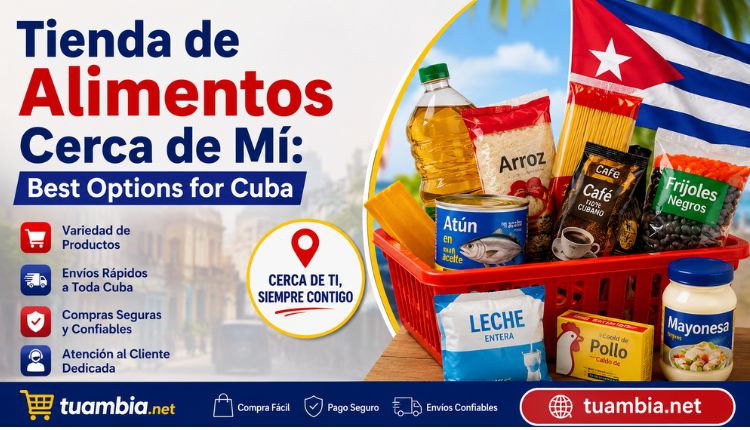
If you’ve typed “tienda de alimentos cerca de mí” into Google more than once this month, you’re not alone. It’s one of the most common searches among people trying to feed their families in Cuba, whether they’re looking for a grocery store around the corner or trying to figure out how to get food to relatives hundreds of miles away. The honest answer is that the search often comes up short. Shelves in Cuba can be unpredictable, lines can stretch for hours, and “nearby” doesn’t always mean “stocked.”
This guide walks through what people are actually looking for when they search that phrase, why the usual answers fall flat, and what alternatives actually get food onto a family’s table.
What People Really Mean by “Tienda de Alimentos Cerca de Mí”
On the surface, it’s a simple local-search query: find a food store close by. But dig into the intent and there are usually three different people typing it:
- Someone in Cuba checking which nearby market has stock today, because inventory changes by the hour.
- A family member abroad trying to locate a store their relative can walk to, so they can send money or arrange a purchase.
- Someone comparing physical stores against online grocery delivery services that ship directly to Cuban addresses.
Google Maps and generic directories handle the first case reasonably well, though results are often outdated. It’s the second and third groups who tend to leave empty-handed, because most listings don’t tell you whether a store actually has food on the shelves, and they definitely don’t tell you how to pay for someone else’s groceries from another country.
Why “Nearby” Doesn’t Guarantee “Available”
This is the part that trips people up. A store can be five minutes away and still have nothing worth buying. Supply in Cuba moves in waves: a shipment arrives, word spreads fast, and the shelves empty within a day or two. Then it’s back to waiting, visit more.
Several government-run and private markets have built reputations, good or bad, tienda de alimentos cerca de mí around how consistently they stock basics like rice, oil, and protein. We’ve covered a few of these in detail, including Supermarket 23 in Guantánamo and Villa Blanca Supermarket, both of which locals check regularly for updates on what’s actually in stock. In Havana, Mercado 23 comes up constantly in these conversations, partly because of its size and partly because it’s become a reference point for pricing across the city.
If you’re trying to help someone find groceries near them, checking in on posts like these before making a trip (or sending money for one) can save a wasted afternoon.
The Alternative Most Families End Up Using
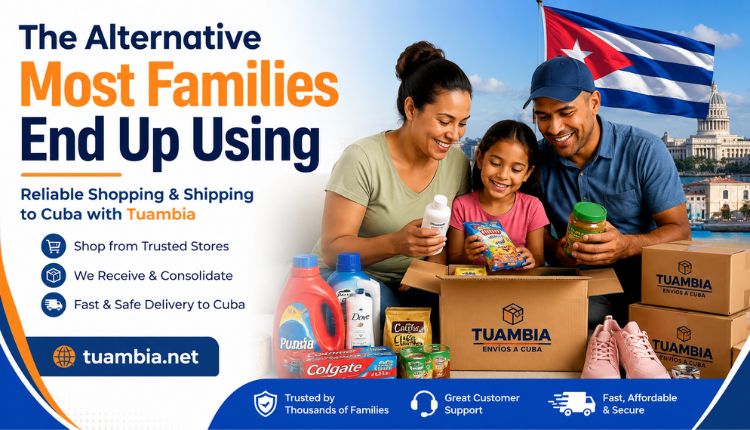
Here’s the thing nobody tells you when you start searching for a food store nearby: for a lot of families, the better move isn’t finding a store at all. It’s sending the groceries directly.
Online platforms built specifically for Cuba let you buy a package of staples from wherever you are and have it delivered to a relative’s door, no line, no gambling on whether the shelves are full that week. We put together a broader look at how this works in Alimentos para Cuba, and if you’re sending from South Florida specifically, Envío de Comida a Cuba desde Miami breaks down the process step by step.
It’s not a perfect substitute. Delivery windows can run a few days, tienda de alimentos cerca de mí and you’re choosing from a set catalog rather than picking items off a shelf yourself. But for anyone who has spent an afternoon calling around trying to find out which store has cooking oil this week, the trade-off is usually worth it.
Comparing Your Options
| Option | Best for | Downside |
| Local supermarket search | Same-day, in-person purchases | Stock is unpredictable; requires being on the ground |
| Government ration stores (bodegas) | Basic staples at controlled prices | Limited selection, long lines |
| Online delivery to Cuba | Sending food from abroad, guaranteed stock | Delivery takes a few days, fixed product lists |
| Local classifieds/resale groups | Hard-to-find items | Prices vary widely, no guarantees |
If you already know which neighborhood you’re shopping for, it’s worth reading up on the specific store before you go. We’ve reviewed several, and the notes people leave about wait times and what’s usually available are more useful than a star rating ever is.
A Few Practical Tips Before You Search Again
Check store-specific posts, not just maps: A pin on Google Maps tells you a store exists. It won’t tell you it ran out of eggs three days ago. Reading recent coverage, like our rundown of Katapulk in Ciego de Ávila, gives you a better sense of what’s actually on the shelves before you commit to a trip or an order.
Think about what “near me” actually needs to solve: If the real goal is getting food to a specific person, the store’s location matters less than how reliably it (or an online alternative) can get the order there. That’s the whole premise behind services like Tu Envío a Cuba, which exist because “closest store” and “store that will actually have what you need” aren’t always the same place.
Don’t overlook appliances when you’re planning ahead: If a family doesn’t have reliable refrigeration, even a successful grocery run doesn’t stretch very far. It’s worth a quick look at options like Refrigerador para Cuba if that’s part of the bigger picture.
Understand where the brand you’re using sources its food: Not every delivery service works the same way behind the scenes. If you want a clearer picture of how one of the more established platforms operates, our deep dive into Tumbia Alimentos covers where the catalog comes from and how orders actually move.
Frequently Asked Questions
Is there an app that shows real-time stock for food stores in Cuba?
Not reliably, no. A handful of Facebook groups and Telegram channels post updates when a store gets a shipment, but there’s no centralized, dependable tracker. This is exactly why so many people give up on “nearby” and switch to ordering delivery instead.
Can I pay for groceries at a specific store in Cuba from the US?
In some cases, yes, through money transfer apps tied to specific merchants. It’s less consistent than using a dedicated delivery platform, though, since you’re relying on someone else to actually go pick up the order.
What’s the difference between a government store and a private one?
Government-run stores (bodegas) sell rationed basics at fixed, low prices but often have thin stock and long lines. Private markets and MLC stores tend to carry more variety and imported goods, at higher prices and usually requiring payment in foreign currency or a linked card.
How far in advance should I place an online grocery order for Cuba?
Most services recommend a few days to a week of lead time, especially around holidays when demand spikes. If you’re working against a birthday or a specific event, order earlier than you think you need to.
The Bottom Line
Searching “tienda de alimentos cerca de mí” usually starts as a simple question and turns into a bigger one: how do I actually make sure my family has food this week? Physical stores still matter, and knowing which ones in your area are worth the trip helps. But for a lot of people abroad, the more dependable path is skipping the search entirely and sending groceries straight to the door. Whichever route fits your situation, it helps to go in with real information instead of a map pin and a guess.
